
The Vascular Research Center (VRC) Frankfurt aims to decode the fundamental principles and molecular and genetic programs that govern the formation and function of vascular and cardiac networks across development, health, and disease. We are interested in how a hierarchically branched vascular tree, and the beating heart emerge, maintain homeostasis under load, and adapt or fail in the face of disease, chronic stress and aging.
About Us
Our Mission
Our long-term goal is to translate this understanding into more precise strategies to prevent and treat cardiovascular complications. By clarifying how cells, signals, and mechanics coordinate the patterning and remodeling of vessels and myocardium, we seek to inform, innovate, and ultimately develop novel interventions that preserve or restore vascular integrity and cardiovascular function in vulnerable patients.
VRC Frankfurt unites complementary experimental and computational approaches in a single, coherent framework. We develop and deploy genetic tools to visualize and manipulate molecules, complexes, and cells with spatial and temporal control, using in vivo models such as mouse together with ex vivo and in vitro systems, including human iPSC-based differentiation and organoid models that mimic human development and disease.
We couple these experimental paradigms to advanced imaging, in vivo physiology, and molecular profiling, and are iterated with predictive computational modelling. This integrated framework allows us to track a single question from the level of the epigenome, RNA, and molecular signalling pathways all the way to tissue architecture, organ performance, and systems-level cardiovascular regulation.
Our Vision
We envision VRC Frankfurt as a reference point for cardiovascular research: a place where complex questions about the vasculature and heart can be followed seamlessly from mechanism to physiology to potential intervention.
We employ a holistic approach to cardiovascular science, systematically navigating molecular and foundational principles alongside organ- and whole-body physiology. Our work moves seamlessly from chromatin and RNA to cells, tissues, and circulation, drawing on engineered human tissues, advanced imaging, in vivo physiology, and computational analysis. By working across scales, we seek to pinpoint cardiovascular vulnerabilities, measure them precisely, and reshape them to protect patients.
Careers
We pursue rigorous, curiosity-driven science in an open, collaborative environment where ideas are shared and challenged. Diverse expertise converges to tackle complex cardiovascular problems with clarity and creativity. Our vision is a future in which cardiovascular robustness can be defined, measured, and strengthened before failure. For career opportunities, please contact Dr. Finsterseifer; we welcome motivated PhD students, postdocs, and interns.
Partners & Funding
Research at VRC Frankfurt is supported by competitive national and international funding, including the DFG Excellence Center Cardiopulmonary institute CPI, the Collaborative Research Centre SFB 1531, the TRR 267 consortium on cardiovascular non-coding RNAs, the ERC Consolidator Grant TRANSCEND, the German Centre for Cardiovascular Research (DZHK), the DFG, international consortia on cardiovascular regeneration and Loewe.
The Institute for Vascular Signalling (IVS) extends the research spectrum of Vascular Research Center Frankfurt through its work on vascular biology, endothelial function and cardiovascular signalling.



Publications & Data Sets
People
News & Events

Funding
ERC Proof of Concept Grant for TRANSLATE: Translation-Guided RNA engineering Platform for Cardiac Haploinsufficiency
We congratulate Prof. Leo Kurian on being awarded a European Research Council (ERC) Proof of Concept Grant for the project TRANSLATE. Building on discoveries from the ERC Consolidator Grant TRANSCEND,…
Awards
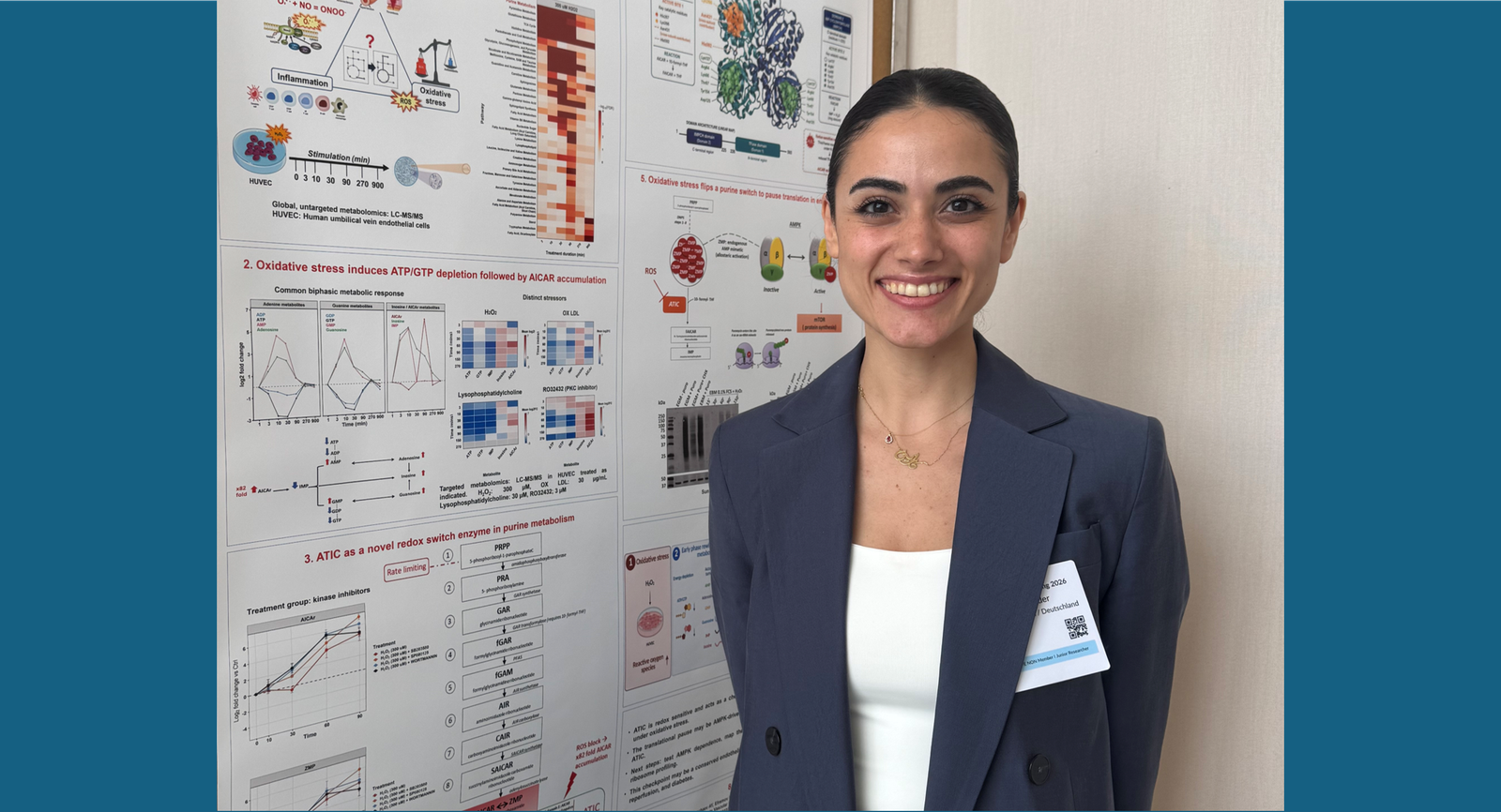
Poster Prize Announcement Carine Abdel Kader
Congratulations to Carine Abdel Kader on receiving a Poster Prize at the SFRR-Europe Conference, held in Mainz from June 3–5! The award recognized the poster “Purine metabolism shows a biphasic…
Awards
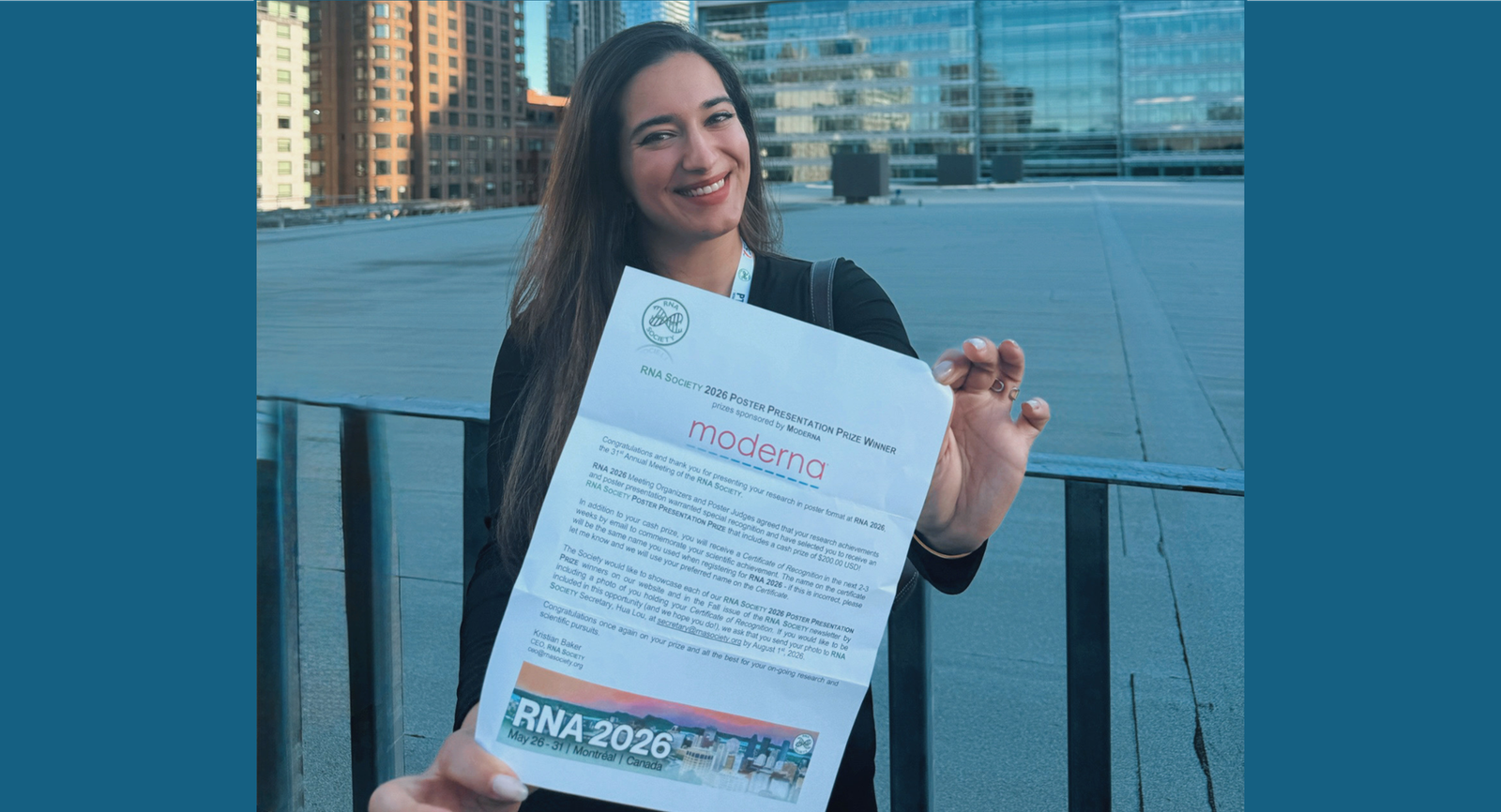
Poster Prize Announcement Diba Rafii
Congratulations to Diba Rafii on receiving a Poster Prize at the International RNA Society Conference 2026, held in Montreal, Canada (May 26–31)!The award recognized the poster “LamelliLnc: A novel endothelial lncRNA…
Frequently Asked Questions
The VRC Frankfurt is an interdisciplinary research center integrating molecular biology, physiology, and translational science to study cardiovascular systems.
It is a central hub for cardiovascular research and teaching at Goethe University Frankfurt, combining molecular biology, systems physiology, and clinical science.
It combines high-level basic science, advanced physiological methods, and strong clinical links, enabling both mechanistic and patient-oriented research.
The Institute is a core component of the VRC, which brings together multiple institutes and collaborative groups in a unified framework.
Research spans vascular and cardiac biology, RNA regulation, metabolism, regeneration, aging, and systems-level control of physiology.
To uncover fundamental principles of cardiovascular function and translate them into improved diagnostic, preventive, and therapeutic strategies.
Expertise spans cardiovascular physiology, molecular biology, RNA biology, metabolism, developmental biology, aging, and clinical cardiology.
The culture is rigorous, collaborative, and driven by curiosity, with open discussion of data and strong emphasis on quality and reproducibility.
Through shared platforms, joint projects, and cross-disciplinary supervision connecting molecular, computational, and clinical expertise.